
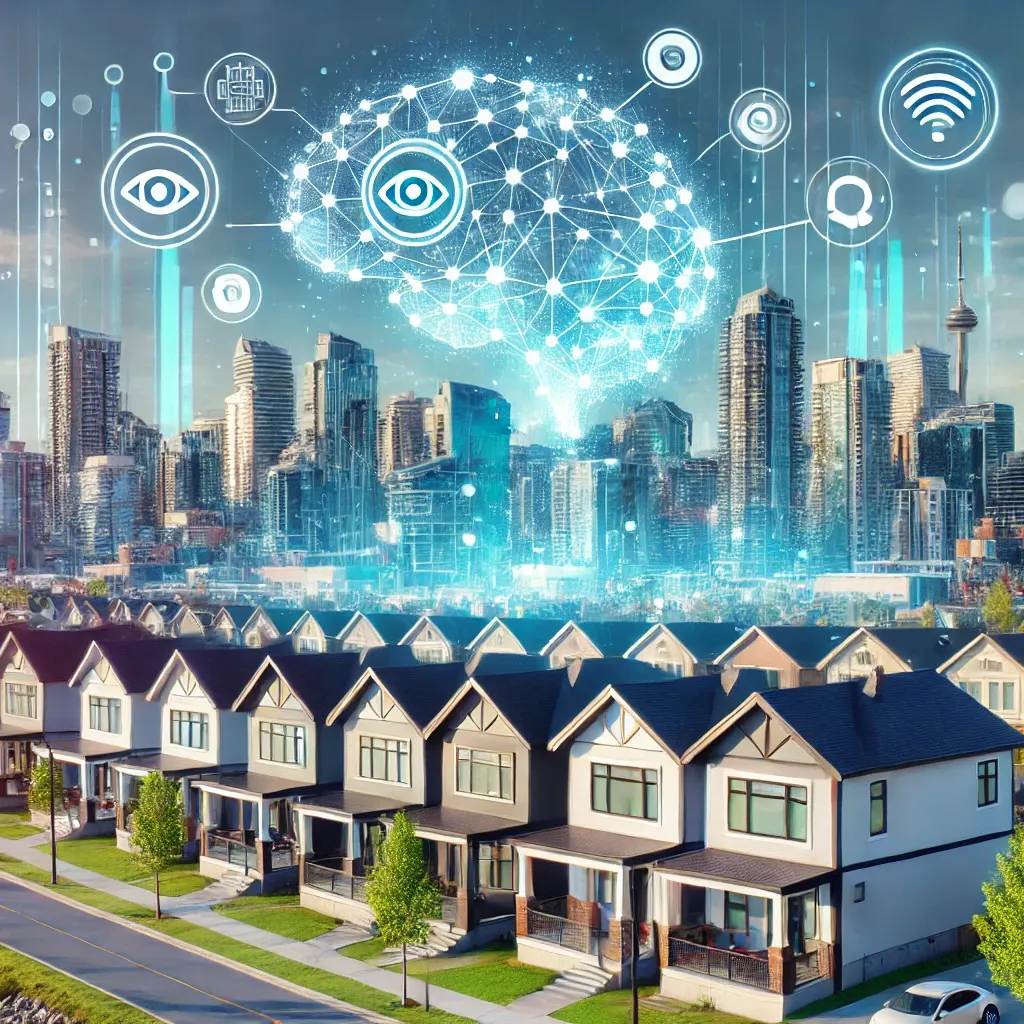
The Future of Real Estate and Artificial Intelligence
Artificial intelligence (AI) has moved far beyond the realm of science fiction. From voice assistants like Siri and Alexa to AI-driven financial apps, the technology is becoming embedded in our everyday lives. Real estate, one of the world’s most important industries, is no exception.
In the next decade, the way buyers search for properties, sellers market their homes, and agents provide services will look very different from today. AI is set to reshape everything from pricing strategies, property searches, home valuations, virtual tours, negotiation, and even legal contracts.
But what exactly will change? And how will it affect buyers, sellers, and real estate professionals in cities like Brampton, Mississauga, and the wider GTA?
Let’s explore the future of real estate in an AI-driven world.
1. AI-Powered Property Searches: Finding Homes Smarter, Not Harder
In today’s market, homebuyers typically browse listings on platforms like Realtor.ca or Zillow. They filter by location, price, and square footage. But AI is about to revolutionize property searches in ways that go far beyond filters.
- Personalized Recommendations: Just like Netflix suggests movies, AI algorithms will analyze buyer preferences, lifestyle, income, commute time, and even personal hobbies to recommend properties.
- Neighborhood Predictions: Instead of just looking at current data, AI will predict how neighborhoods will evolve in the next 5–10 years. For example, it may recommend a home in Caledon by analyzing future infrastructure projects, school developments, and price growth trends.
- Voice & Chat Search: Buyers could soon say, “Show me homes in Brampton with a backyard, within 30 minutes of downtown Toronto, under $900,000,” and AI will instantly generate results.
This kind of intelligent search means buyers will spend less time scrolling through endless listings and more time visiting homes that truly fit their needs.
2. Smarter Pricing: AI Will Predict the Right Price Every Time
One of the biggest challenges in real estate is pricing a property correctly. Price too high, and the home lingers on the market. Price too low, and sellers lose value. AI has the power to eliminate much of this guesswork.
- Real-Time Market Analysis: AI systems can pull data from thousands of listings, recent sales, neighborhood trends, and even economic indicators to provide the most accurate pricing model.
- Dynamic Pricing: Just like airline tickets fluctuate in price depending on demand, AI tools could help sellers adjust home prices in real time to attract the right buyers.
- Predicting Future Value: Beyond current pricing, AI could estimate how much a home will be worth in five or ten years, helping buyers make smarter long-term investments.
For sellers in markets like Brampton or Mississauga, this could mean selling faster at optimal value without over-relying on human guesswork.
3. Virtual Reality and AI: Touring Homes Without Leaving the Couch
The COVID-19 pandemic already accelerated the use of virtual tours and 3D walkthroughs in real estate. But in the next decade, AI will make these tours even more powerful.
- AI-Personalized Virtual Tours: Imagine logging into a virtual tour where the AI highlights features most relevant to you. For a family, it might showcase the spacious backyard and school proximity. For a young professional, it might emphasize a modern kitchen and short commute.
- Augmented Reality Staging: Sellers won’t need to hire expensive staging companies. AI tools will allow buyers to “see” a home staged in different styles—modern, traditional, minimalist—with just a click.
- Global Buyers: Overseas investors could confidently buy homes in Toronto or London, Ontario, without stepping foot inside, thanks to AI-enhanced, interactive property experiences.
This not only speeds up the transaction process but also expands the pool of potential buyers.
4. AI in Negotiations: Smarter Deals for Buyers and Sellers
Negotiations in real estate can be stressful. Buyers want the lowest price, while sellers aim for maximum value. AI could act as a neutral advisor, analyzing real-time data to recommend fair terms.
- Offer Predictions: AI will predict how much a seller might accept based on market conditions and recent transactions.
- Counteroffer Assistance: Instead of relying solely on gut instinct, agents could use AI to generate counteroffers backed by data.
- Risk Analysis: AI could identify red flags in offers, contracts, or buyer profiles, helping sellers avoid potential legal or financial pitfalls.
For real estate agents, this doesn’t replace negotiation skills—it enhances them with stronger data-backed insights.
5. AI and Mortgage Approvals: Faster, Fairer Lending
One of the most stressful aspects of buying a home is securing a mortgage. AI is poised to streamline this process by:
- Speeding Up Approvals: Automated AI systems can review income, credit history, and spending patterns instantly, cutting approval times from weeks to days.
- Fairer Lending: Unlike traditional models that may unintentionally discriminate, AI can be programmed to assess applicants more fairly by focusing on real financial behavior rather than outdated credit scores.
- Customized Mortgage Plans: AI could suggest tailored mortgage solutions that adapt to a buyer’s income fluctuations or long-term goals.
This creates a smoother buying experience and helps more people qualify for homes in growing markets across the GTA.
6. Predictive Maintenance and Smart Homes
AI won’t just change how we buy and sell—it will change how we live in homes. Smart home devices powered by AI are already becoming popular, and in 10 years, they’ll be standard.
- Predictive Maintenance: AI systems will detect when a roof needs repair or when an appliance is likely to fail, saving homeowners costly surprises.
- Energy Efficiency: Smart homes will optimize electricity, heating, and cooling, lowering bills and increasing property values.
- AI-Driven Security: Homes will come equipped with predictive security systems that can distinguish between normal activity and potential intruders.
Buyers will increasingly factor these AI-powered smart features into their purchase decisions.
7. Will AI Replace Real Estate Agents?
One of the biggest questions is whether AI will eventually replace real estate agents. While AI will handle data-heavy tasks, the human touch will remain irreplaceable.
- AI Handles Data, Agents Handle People: Pricing models, property matches, and virtual tours can be automated, but empathy, trust, and negotiation require human expertise.
- Advisory Role Expands: Agents will spend less time on paperwork and more time building relationships, giving strategic advice, and guiding clients through emotional decisions.
- Hybrid Model: The future of real estate is not “AI vs. Agents” but “AI + Agents”—where technology enhances human skills.
For brokers like Harpreet Rakhra, adopting AI tools early will mean staying ahead of competitors while still delivering personalized service.
8. Challenges of AI in Real Estate
Despite its potential, AI also brings challenges:
- Privacy Concerns: AI systems will collect vast amounts of personal and financial data, raising questions about security.
- Bias in Algorithms: If not carefully designed, AI tools could reinforce biases rather than eliminate them.
- Accessibility: Smaller brokerages may struggle to afford cutting-edge AI tools compared to larger firms.
- Over-Reliance: Buyers and sellers must remember that while AI is powerful, it is not infallible. Human judgment remains essential.
Addressing these challenges will be key to ensuring AI improves the industry fairly and effectively.
The Next Decade of Real Estate
AI is not just a buzzword—it’s a game-changer for the real estate industry. Over the next 10 years, buyers will find homes faster with smarter searches, sellers will price properties more accurately, and transactions will become more efficient and transparent.
But while AI will handle data and automation, the human side of real estate—trust, empathy, and negotiation—will always need skilled professionals. For buyers, sellers, and agents across the GTA, the future is not about replacing people with machines, but about creating a seamless partnership between human expertise and AI innovation.
In the next decade, those who embrace AI will not only stay competitive but will redefine what it means to buy and sell homes.